Testosterone Booster vs TRT: Which Is Right for You?
Quick Answer: Testosterone Booster vs TRT
A testosterone booster is a non-prescription supplement that uses nutrients and botanicals to support your body's own testosterone production, while TRT is prescription hormone replacement that adds testosterone directly under medical monitoring. Boosters suit men with normal-to-low-normal levels seeking daily support; TRT suits diagnosed clinical deficiency. Get tested before choosing either path.
- Booster: works with your own hormones, no prescription, fully reversible, modest support.
- TRT: replaces the hormone, needs a diagnosis and bloodwork, powerful but a long-term commitment.
- First move: a morning blood test, because the right choice follows your actual numbers.
If you have spent any time searching phrases like "TRT testo" or "best testosterone booster," you have probably noticed the two worlds bleed into each other. Forums stack them side by side, ads for clinics run next to ads for capsules, and the honest question underneath all of it is simple: for the way you actually feel, is a natural testosterone booster or TRT the smarter place to start? This guide answers the testosterone booster vs TRT question without the sales pressure that usually comes attached, because the two are not really rivals. They sit at different points on the same road, and knowing which point you are standing on is the whole game.
Low energy, softer drive, a flatter mood, a stubborn middle: these are the complaints that send men down this path. What almost nobody tells you at that stage is that the same symptom list has half a dozen causes, only one of which is a genuinely low hormone. So before we compare the tools, it is worth being clear about what each tool actually is, and what it can and cannot do.
What TRT actually is
Testosterone replacement therapy is exactly what the name says: a prescription medicine that puts testosterone into your body from the outside. It is delivered as a skin gel, an injection every one to two weeks, or long-acting pellets placed under the skin every few months. It is prescribed by a doctor, dispensed by a pharmacy, and it is a serious, effective intervention for men who genuinely need it.
The reason TRT sits behind a prescription is that it does not nudge your system, it takes over from it. When you add testosterone from outside, your brain reads the higher level and dials down its own signal to the testicles, so your natural production winds down while you are on therapy. That is why TRT is generally a long-term commitment rather than a short course, and why it is paired with regular bloodwork to watch testosterone levels, red blood cell count and prostate markers. Used correctly in a diagnosed man, it can be genuinely life-changing. Used casually, or chased for gym gains in someone whose levels were never low, it carries real trade-offs, including effects on fertility that many men do not think about until later.
The key phrase throughout is "diagnosed man." TRT is the recognised medical answer to clinical hypogonadism, which is confirmed with symptoms plus low testosterone measured on two separate morning blood tests. It is not a lifestyle upgrade and it is not something to reverse-engineer from an online quiz.
What a natural testosterone booster does
A natural testosterone booster works from the opposite direction. Instead of adding hormone, it supplies the raw materials, minerals and plant compounds that your own hormone machinery uses, then gets out of the way and lets your body do the producing. Nothing overrides your signal; nothing shuts your own production down. That is the fundamental structural difference, and it drives almost every practical difference that follows.
The ingredients that show up repeatedly in this category are the ones with at least some human research behind a specific, narrow effect. Standardised Tongkat Ali has small trials pointing at improved testosterone markers and reduced fatigue over several weeks. Boron has short studies suggesting it shifts free testosterone and sex-hormone-binding globulin. Zinc matters because a genuine deficiency depresses testosterone, so correcting it helps. Botanicals like horny goat weed and saw palmetto play supporting roles around drive and prostate comfort rather than raw hormone output. If you want the detailed evidence read, our breakdown of the Tongkat Ali and boron testosterone-support evidence walks through what the studies do and do not show.
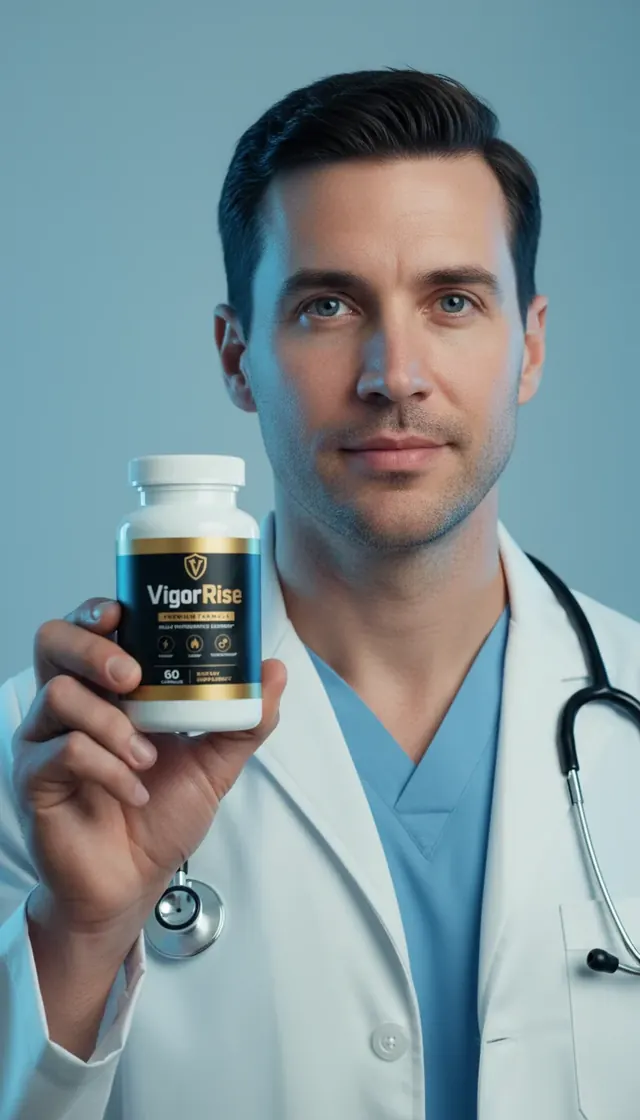
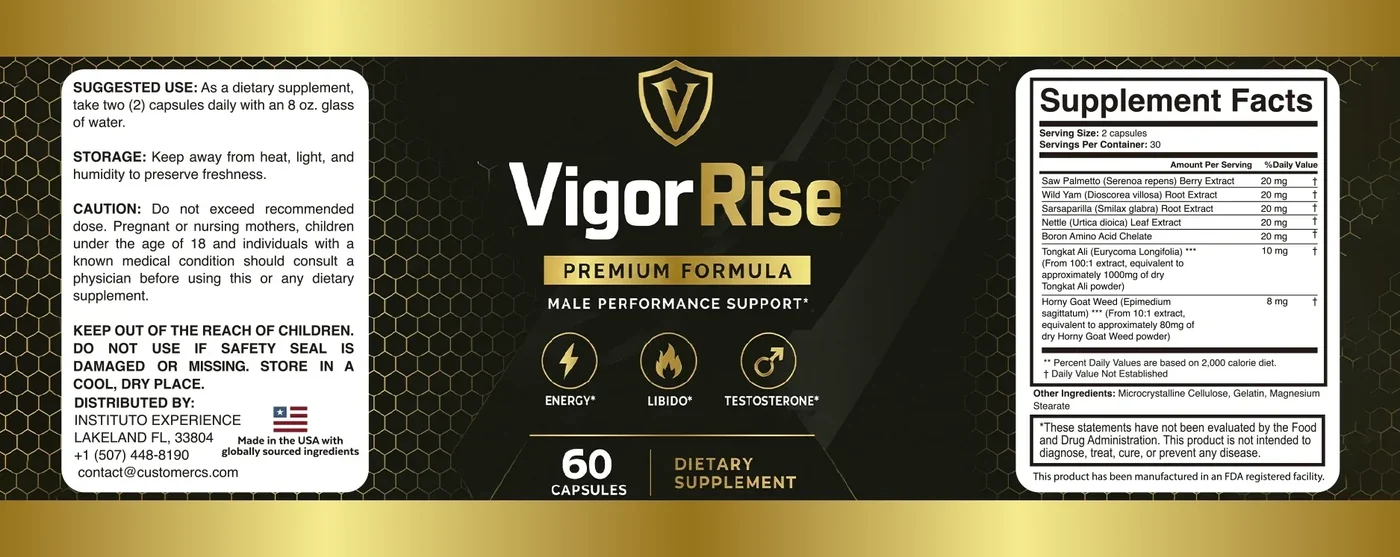
This is where a formula like VigorRise sits. It is a once-daily botanical and mineral capsule with every amount printed on the label, positioned as daily support for energy, drive and healthy testosterone in men whose own production is still working. It is honest about being support, not replacement, and that honesty is the point of this entire comparison.

Testosterone Booster vs TRT: The Real Differences
Strip away the marketing on both sides and five practical differences decide almost every case. They are worth looking at one at a time, because a man's situation usually points clearly at one column.
| Factor | Natural testosterone booster | TRT (prescription) |
|---|---|---|
| What it does | Supports your own production with nutrients and botanicals | Adds testosterone directly, replacing your own supply |
| Access | Over the counter, no prescription | Requires diagnosis, prescription and monitoring |
| Strength of effect | Modest, gradual, over 8–12 weeks | Large and reliable in diagnosed men |
| Reversibility | Fully reversible; stop any time | Suppresses natural production; not a casual on/off |
| Ongoing cost | Predictable supplement price | Medication plus repeat consultations and labs |
| Fertility | No suppressive effect | Can reduce sperm production while on it |
| Best suited to | Normal to low-normal levels, general support | Confirmed clinical deficiency |
Access and gatekeeping. A booster you can buy today; TRT you cannot, and that gate exists for a reason. The prescription requirement is not bureaucracy for its own sake, it is because someone needs to confirm the diagnosis and watch the downstream effects. If that friction feels annoying, it is worth reframing it as free quality control.
Strength versus subtlety. Be realistic in both directions. TRT in a deficient man produces changes you can feel and measure. A natural booster produces something smaller and slower, a gentle lift in energy and drive layered on top of good fundamentals. Anyone promising TRT-level results from a capsule is selling you something. Anyone dismissing boosters as pure placebo is ignoring the modest but real signals in the better-studied ingredients.
Reversibility. This is the quiet giant. Stop a booster and nothing happens; your body was doing the work all along. Come off TRT after months or years and your suppressed natural production has to restart, which can take time and does not always bounce back cleanly. That asymmetry is exactly why a booster makes sense as a first, low-stakes step and TRT makes sense as a considered, monitored commitment.
Start with the low-stakes, fully reversible option
VigorRise is a once-daily botanical and mineral formula with every amount printed on the panel, built to support your own testosterone rather than replace it. No prescription, nothing to taper off.
Check Availability & Current OfferCost, access and reversibility over time
The sticker price is only part of the money question. A supplement is a single predictable line item: you know what the bottle costs and that is the end of it. TRT is a subscription to a system. There is the medication itself, but also the initial workup, the repeat blood tests to keep an eye on red cell count and prostate markers, and the follow-up consultations, often indefinitely, because stopping is not straightforward. None of that is a criticism of TRT; it is the correct and responsible way to run hormone therapy. It just means the honest cost comparison is a bottle against a long relationship with a clinic.
Access follows the same logic. The booster's low barrier is a genuine advantage for the large group of men whose levels are borderline rather than clinically low, the men who do not qualify for therapy and would not benefit from overriding a system that still works. For that group, an over-the-counter option that supports normal production is not a consolation prize, it is the appropriate tool. For the smaller group with confirmed deficiency, the prescription gate is protecting them, and the supplement genuinely is not the answer.
Who each option actually suits
Forget the averages for a moment and picture the two men who most often ask this question.
The first is in his late thirties or forties, tired in the afternoons, drive a little flatter than it was, carrying a few extra pounds and sleeping badly. He has not been tested. For him, jumping to TRT would be premature and probably unavailable, because his numbers are likely normal to low-normal and his symptoms are being driven as much by sleep, weight and stress as by any hormone. A natural booster taken consistently for eight to twelve weeks, stacked on top of fixing the sleep and the training, is the sensible, reversible experiment. If nothing shifts, he has lost little and learned something.
The second man has the same symptoms but got tested, came back genuinely low on two morning draws, and has a doctor confirming clinical deficiency. For him, a supplement is the wrong tool. He needs the recognised medical treatment, and reaching for a capsule instead would be swapping an effective therapy for a hopeful one. The two men look identical from the outside. The only thing that separates them is a blood test, which is precisely why that test is the fork in the road rather than an optional extra.
Get tested first: the step most men skip
Here is the uncomfortable truth that both the supplement industry and some of the flashier TRT clinics would rather you not dwell on: you cannot answer the testosterone booster vs TRT question responsibly without a number. Symptoms alone are a terrible guide, because the exact feeling of low testosterone is also the feeling of poor sleep, an underactive thyroid, heavy drinking, a medication side effect, depression, or simply carrying too much weight.
Testing is not complicated. Ask for a morning blood draw, generally before ten o'clock, because testosterone follows a daily rhythm and falls through the day. Get total testosterone plus either free testosterone or sex-hormone-binding globulin, since the free fraction is the biologically active part and two men with identical totals can feel completely different. If the first reading is low, repeat it on a second morning before acting, because single readings bounce. That short protocol tells you which conversation you are actually in. For the wider picture of what to track alongside it, our guide to the annual men's health numbers worth tracking covers the rest of the panel.
Three objections worth answering honestly
"Boosters are just expensive placebo." This is half right and half lazy. Plenty of products in this space are underdosed pixie dust, and if a label hides its amounts in a proprietary blend, be suspicious. But the better-studied ingredients, dosed transparently, have real if modest human data. The correct stance is not "it all works" or "none of it works," it is "read the label, check the doses, and expect support rather than a miracle." That is exactly why full-disclosure panels matter so much in this category.
"TRT is the shortcut, so why bother with the slow route?" Because a shortcut you can never fully undo is not a shortcut, it is a lane change. Starting TRT means suppressing your own production, often permanently in practice, and taking on lifelong monitoring and possible fertility effects. For a man whose system still works, that is a large price to skip a reversible eight-week trial that might have been enough. TRT is the right road for the diagnosed; it is an expensive detour for everyone else.
"If I feel low, my testosterone must be low." This is the most common and most costly assumption. Feeling flat correlates poorly with your actual level, which is the entire argument for testing before spending money in either direction. Many men who assume they need hormone help discover their number is fine and their real problem is six hours of broken sleep. Neither a booster nor TRT fixes that.
A testosterone booster and TRT are not competitors fighting for the same customer. One supports a working system; the other replaces a failing one. The test that tells you which system you have is worth more than either product.
Where VigorRise honestly fits
Given all of that, here is the straight version of where a formula like this belongs. VigorRise is a natural first step and a reasonable ongoing complement to good habits, not a TRT substitute. It suits the man with normal to low-normal levels who wants daily support for energy, drive and healthy testosterone while he gets the fundamentals right, and it suits him precisely because it is reversible, needs no prescription, and works with his own biology instead of overriding it.
What it is not, and what no honest page should imply it is, is a treatment for diagnosed low testosterone or a replacement for prescribed therapy. It does not diagnose, treat, cure or prevent any condition. If your bloodwork and your doctor point to TRT, that is the road, and a supplement does not change that. Where a booster earns its place is in the far larger group of men who are borderline, untested-but-cautious, or already on TRT and simply looking for label-transparent daily support around it. If you want to see how a full-disclosure formula reads, our VigorRise ingredient breakdown lays out the panel amount by amount.
Medical note: this article is general information, not medical advice. TRT is a prescription therapy that must be managed by a doctor, and a supplement is not a substitute for it. Speak to a healthcare professional before starting or stopping anything, especially if you take medication or manage a health condition — Tongkat Ali and saw palmetto can interact with some drugs.
Frequently asked questions
What is the difference between a testosterone booster and TRT?
A testosterone booster is a non-prescription supplement that supplies nutrients, minerals and botanicals meant to support your body's own testosterone production. TRT, or testosterone replacement therapy, is a prescription medicine that adds testosterone to your body directly through gels, injections or pellets. The booster works with your own hormone system and needs no doctor's sign-off; TRT overrides that system, requires a diagnosis, and is monitored with regular bloodwork because it changes your physiology in ways a supplement does not.
Is a testosterone booster or TRT better for low testosterone?
It depends on how low your levels genuinely are and why. For men with clinically diagnosed low testosterone confirmed on two morning blood tests, TRT is the medically recognised treatment and a supplement is not a substitute for it. For men whose readings are normal to low-normal, or who have not been tested at all, a natural booster paired with better sleep, weight and activity is a reasonable first step. Neither is better in the abstract; the right answer follows your numbers and a doctor's assessment.
Can natural testosterone boosters replace TRT?
No. A natural testosterone booster cannot replace prescription testosterone replacement therapy and should not be used to treat a diagnosed hormone deficiency. Boosters are designed to support healthy testosterone in men whose own production is still working, not to add hormone to a body that has stopped making enough. If a doctor has diagnosed clinical hypogonadism, stopping or refusing prescribed therapy in favour of a supplement is a medical decision to make with that doctor, never on the strength of a product page.
Should I get my testosterone tested before choosing?
Yes. A morning blood test for total and free testosterone, repeated on a second morning if the first is low, tells you whether you are dealing with genuine deficiency or with the fatigue, weight and sleep issues that mimic it. Without that number you are guessing, and both a booster and TRT are easier to judge against a known baseline. Testing first also reveals the common non-hormonal causes of low energy that neither option addresses.
Scientific references
- NIH MedlinePlus — Hypogonadism
- Urology Care Foundation — Low testosterone and replacement therapy
- Mayo Clinic — Testosterone therapy: potential benefits and risks as you age
- NIH Office of Dietary Supplements — Zinc fact sheet for health professionals
- Harvard Health Publishing — Is testosterone therapy safe?
Related reading
- The best testosterone booster for 2026 and what actually works
- Natural testosterone booster ingredients that genuinely work
- Testosterone booster side effects worth knowing before you start
- The annual men's health numbers worth tracking every year
Support your own testosterone before you replace it
Tongkat Ali, horny goat weed, saw palmetto, nettle leaf, sarsaparilla and boron in a single daily capsule — every amount disclosed, fully reversible, no prescription required.